N A N O P R O B E S E - N E W S
Vol. 9, No. 4 April 30, 2008
Updated: April 30, 2008
In this Issue:
|
This monthly newsletter is to inform you about techniques to improve your immunogold labeling, highlight interesting articles and novel applications of metal nanoparticles, and answer your questions. We hope you enjoy it and find it useful; as always, let us know if we can improve anything.
. . . . . . . . . . . . . . . . . . . . . . . . . . . . . . . .
In Vivo Labeling with Nanogold®A major challenge for electron microscopy (EM) is its application in vivo. Electron microscopy is an established imaging technology that can produce 3-dimensional reconstructions of cellular architecture at nanometer-scale resolution when combined with tomographic methods. However, development of in vivo EM methods for visualizing specific cellular components has greatly lagged development of light microscopic (LM) methods, because both current EM labeling methods are problematic: pre-embedding labeling requires disruptive fixation and permeabilization, while postembedding labeling has poor penetration, and labeling is often confined to the section surface.Part of the problem is that no good probes or methods exist for probing components at the EM level in living cells. The solution is a method for in vivo intracellular probe delivery that avoids permeabilization and fixation, combined with a probe which is stable and non-toxic to live cells. In collaboration with Dr. Andrew Belmont of the Cell and Developmental Biology Department at the University of Illinois at Urbana-Champaign, we have found that microinjection of Nanogold® antibody conjugates produces dense, viable in vivo labeling, and the method is described in our recent paper in Nature Methods. |
Labeling was carried out using antibodies against green fluorescent protein or against Lac-repressor protein (LacI). Nanogold-labeled Fab' antibody fragments were prepared by reduction of F(ab')2 fragments with dithiothreitol and separation of reduced antibody using gel filtration over a desalting column (GH25, Millipore), followed by reaction at pH 6.5 with a 2.5-fold or 3-fold excess of Monomaleimido Nanogold; whole IgG antibodies were labeled directly, without reduction, at pH 7.5 using Mono-Sulfo-NHS-Nanogold. Conjugates were isolated by gel filtration over a Superose-12 column, eluted with 0.02 M sodium phosphate buffer with 0.15 M sodium chloride, pH 7.4.
In vivo labeling was first tested using Chinese hamster ovary (CHO) A03_1 cells stably expressing enhanced GFP fused to Lac repressor (EGFP-LacI). A03_1 cells contain a 90-Mbp, heterochromatic, amplified chromosome arm, forming a condensed mass of about 1 µm diameter in most interphase nuclei; approximately one-third of the 90 Mbp comprises plasmid repeats containing the 256-mer Lac operator sequence. Nanogold-labeled anti-LacI Fab' fragments or IgG whole antibodies were microinjected at concentrations between 25 ng/µL and 500 ng/µL into cells, and labeling efficiency and signal-to-noise ratio were evaluated by light microscopy after silver enhancement. Simultaneous injection of dextran–Texas red with the antibody allowed light microscopy selection of microinjected cells for sectioning. Incubation at 37°C 45–60 minutes after injection, and subsequent fixation with 2.5% glutaraldehyde, allowed efficient antibody labeling, comparable to or exceeding labeling by conventional immunostaining after detergent permeabilization and light fixation.
In vivo labeling produced low background (typically 40–100-fold lower particle density, relative to specific labeling, using appropriate antibody titration). Labeling was uniform throughout the amplified chromosome arm in A03_1 cells, demonstrating penetration of injected antibodies into densely packed chromatin. In contrast, when using conventional staining methods, restriction of Nanogold staining to the periphery of large-scale chromatin fibers or subdomains contained within the amplified chromosome region in A03_1 cells consistently observed. Similar results were obtained on several other engineered, Lac operator–tagged chromosome regions.
| left: Demonstration of in vivo immunogold labeling using A03 cells: high- magnification electron microscopy image of a thin Epon section through the cell (scale bar = 1 µm). right: In vivo labeling of DNA replication foci, showing GFP-PCNA, labeled with Nanogold anti-GFP antibody, within condensed, large-scale chromatin domains, using permeabilization before glutaraldehyde fixation to better preserve chromatin structures (Scale bar = 250 nm). |
To demonstrate the more general potential of in vivo immunogold labeling, we used the anti-GFP labeled with Nanogold to label sites of DNA replication. In vivo expression of GFP-PCNA specifically labels DNA replication foci as cells progress through S-phase. Changes in the shape, size and intranuclear location of 'replication factories' in mammalian cells are well documented and provided an excellent control and test system to evaluate the specificity and efficiency of the in vivo labeling method. CHO-K1 cells were transfected with a plasmid encoding GFPPCNA and selected cells with the distinctive, mid–S phase replication pattern for microinjection. In vivo immunogold staining in non-extracted cells showed 0.2–0.35 µm diameter foci with a classic pattern-3 perinucleolar and peripheral spatial distribution. Unfortunately, conventional heavy metal staining is not specific for DNA, preventing good visualization of chromatin in intact cells, and the use of DNA-specific stains for electron microscopy remains problematic. Although not ideal, examination of cells fixed after detergent permeabilization allows simultaneous visualization of chromatin and gold-labeled PCNA. In vivo labeling allows strong glutaraldehyde fixation just seconds after cell permeabilization, improving preservation of 10 and 30 nm chromatin fiber folding within large-scale chromatin fibers, which is lost during prolonged, conventional pre-embedding immunogold labeling procedures. Inspection of PCNA foci in intact and extracted cells showed that Nanogold penetrates throughout the volume of the foci, with uniform distribution of label. Compact aggregates of PCNA surrounded by unlabeled chromatin were not observed: instead, pattern-3 replication foci appeared to contain condensed chromatin masses similar in size to other adjacent unlabeled chromatin masses. These results contrast with previous work that suggested that replication takes place at the periphery of condensed chromatin, based on pulse-chase labeling with halogenated nucleotides and immunolabeling after embedding. The observed distribution also does not appear to fit models postulating the existence of massive, non-chromatin 'replication factories' with decondensed, replicating DNA reeling.
Using in vivo immunogold labeling, three-dimensional cellular localization of chromosomal proteins was demonstrated with greatly improved efficiency, contrast and sensitivity relative to standard immunogold methods. Although microinjection is required, no noticeable perturbation of nuclear structure was observed as a consequence of microinjection. These results show that in vivo immunogold labeling improves epitope accessibility, ultrastructural preservation and three-dimensional visualization. In addition, targeting to GFP allows correlated light and electron microscopy, and the tracking of processes and selection of points in a dynamic process at which to fix and prepare for EM. Large-scale chromatic motifs were detected within intact interphase nuclei of CHO cells, and the ultrastructure of DNA replication 'factories' labeled with GFP–proliferating cell nuclear antigen (PCNA) were successfully visualized. This in vivo EM approach has many potential applications to the study of cellular processes at the molecular level.
Reference:
More information:
. . . . . . . . . . . . . . . . . . . . . . . . . . . . . . . .
One frustrating aspect to etching is that it is very unpredictable - the same procedure, using the same reagents, can be fine on one occasion, but strongly etched when it is repeated. Unfortunately, no clear reason has been established for this variability: it may be due to impurities in the osmium used for osmication, slight differences in the formulation of the silver enhancement reagents (particularly reagents that include a natural product as a thickening agent, such as HQ Silver), or trace amounts of other reagents from other stages in the preparation and staining. If you find this to be a problem, we recommend the following methods to prevent it:
Use a lower osmium concentration
Burry and co-workers have found that silver etching by osmium tetroxide may be greatly reduced by using 0.1% osmium tetroxide instead of 1%; this has been found to give similar levels of staining, but with greatly reduced etching power.
Reference:
Use gold toning to protect silver-enhanced gold and to prevent particle loss
Gold toning is the post-treatment of silver enhanced immunogold particles with a reagent which deposits a thin layer of gold onto their surface. Because it is less readily oxidized than silver, gold is resistant to etching, and this layer protects the silver-enhanced gold particles and renders them impervious to etching. Two procedures have been reported:
(1) Arai method:
References:
(2) An alternative procedure has been reported by Sawada and Esaki:
References:
A possible disadvantage of using gold toning is that it can generate more background than silver enhancement alone. However, Suikkanen and group have reported a handy pre-embedding protocol using Nanogold® immunolabeling and silver enhancement with gold toning, which confers excellent thermal stability as well as resistance to osmium etching. This was used to study the effects of endocytosis-modulating drugs upon the release of canine parvovirus (CPV) from endosomal vesicles during infection of cultured cells, and the role of phospholipase A2 (PLA2) in this process. The virus was localized by electron microscopy after exposure to the different drugs: the results showed that PLA2 activity is required, and suggested that while endosomes remain intact after infection, PLA2 causes changes in permeability which are essential for release. Feline kidney cells were incubated with CPV (m.o.i. 50) in Dulbecco’s modified Eagle’s medium for 20 hours in the presence or absence of the drugs: when the drugs were present, they were added on the top of the cells 30 minutes before the virus and maintained until fixation.
Their pre-embedding procedure is:
Reference:
Avoid the use of uranyl acetate
Although not an absolute requirement, etching often results from the use of uranyl acetate applied after osmium tetroxide. Replacement of the osmium tetroxide with a less oxidizing stain, such as lead citrate without osmium, may help reduce or eliminate etching.
Use Gold enhancement instead of silver enhancement
Gold Enhancement is an alternative autometallographic process, developed at Nanoprobes, in which gold rather than silver is deposited. Gold is not susceptible to etching by osmium, and therefore using gold enhancement in place of silver will ensure that the enhanced particles resist even strongly oxidizing poststaining conditions.
There are other reasons to consider GoldEnhance. In addition to conferring resistance to osmium etching, it provides other advantages:
More information:
. . . . . . . . . . . . . . . . . . . . . . . . . . . . . . . .
Synthetic cationic copolymers of poly(ethylene imine) (PEI) and poly(ethylene glycol) (PEG) are regarded as effective agents for enhanced delivery of nucleic acids in various applications; in addition, we have recently reported on several studies suggesting that Nanogold and other gold nanoparticles can facilitate transfection. Williams and group have investigated the application of these findings to the delivery of ESOs, and in their recent paper in BMC Biotechnology, they report on their whether PEG-PEI copolymers and gold conjugates can facilitate ESO-mediated dystrophin expression after intramuscular injections into tibialis anterior (TA) muscles of mdx mice.
The authors utilized a set of PEG-PEI copolymers containing 2 kDa PEI and either 550 Da or 5 kDa PEG, both of which bind 2’ OMe ESOs with high affinity and form stable nanoparticulates with relatively low surface charge. Copolymers are designated using a nomenclature where the subscript indicates the number of PEG chains grafted per molecule of PEI. For example, PEI2K(PEG550)10 indicates 10 PEG chains of 550 daltons grafted to each 2 kDa PEI molecule. Three weekly intramuscular injections of 5 µg of ESO complexed with PEI2K-PEG550 copolymers resulted in about 500 dystrophin-positive fibers and about 12% of normal levels of dystrophin expression at 3 weeks after the initial injection: this is significantly greater than for injections of ESO alone, which have been found to be almost completely ineffective.
In order to enhance biocompatibility and cellular uptake, the PEI2K-PEG550 and PEI2K-PEG5K copolymers were also functionalized by covalent conjugation with Nanogold® (NG) or adsorbtion to colloidal gold (CG). Nanogold (NG) labeling was conducted using Mono-Sulfo-NHS-Nanogold. 75 nmol of PEI2K(PEG550)10 was mixed with 6 nmols of Mono-Sulfo-NHS-Nanogold in 780 µL of sterile water (pH = 8.0). The resulting solution was incubated for 24 hours on ice, frozen, and subsequently freeze-dried and stored at -20°C. Adsorption of colloidal gold (CG) to PEI2K(PEG5K)10 was performed by mixing 300 µl of 5 nM CG particles (Sigma-Aldrich) with 30 mg of PEI2K(PEG5K)10 (in 1 mL deionized water) and incubating at 4°C overnight. The polymer solution was subsequently freeze-dried and stored at -20°C. The NG and CG labeled copolymers are designated as NGPEI2K(PEG550)10 and CG-PEI2K(PEG5K)10, respectively
With the same injection and dosing regimen, no significant difference was found by Western blot in dystrophin expression between the Nanogold-PEI2K-PEG550, Colloidal gold-PEI2K-PEG5K, and non-functionalized PEI2K-PEG550 copolymers. However, while dose-response experiments using the CG-PEI2K-PEG5K copolymer with total ESO ranging from 3-60 µg yielded a maximum of about 15% dystrophin expression, further improvements in dystrophin expression - up to 20% of normal levels - were found at 6 weeks after 10 twice-weekly injections of the Nanogold-PEI2K-PEG550 copolymer comp1exed with 5 µg of ESO per injection. This injection and dosing regimen yielded over 1000 dystrophin-positive fibers. No overt signs of cytotoxicity were found by H&E staining of the affected muscle groups. The authors conclude that PEGylated PEI2K copolymers are efficient carriers for local delivery of 2’OMe ESOs and warrant further development as potential therapeutics for treatment of DMD. This work also confirms the efficacy and biocompatibility of Nanogold as a delivery agent
Reference:
More information:
. . . . . . . . . . . . . . . . . . . . . . . . . . . . . . . .
The resulting architecture is a topologically complex ladder-shaped polycatenane, where the "rungs" of the ladder are used to bring together the individual rings of the mechanically interlocked structure, and the "rails" are available for hierarchical assembly. The polycatenane structure was used to demonstrate the relative orientation of proteins, complementary DNA, and Nanogold® particles.
| Formation of Nanogold-labeled [2]-catenane, illustrating spatial control over the relative positions of the gold particles. The yellow region hybridizes to the yellow region, enabling ligation and locking of the structure in place. Cleavage with BsaA I endonuclease produces the two open ring structures (3) and (4). |
Nanogold-Labeled DNA was prepared by the reaction of amino-modified DNA with Mono-Sulfo-NHS-Nanogold at a concentration of 6 x 10⁻⁹ mol for 1 hour in 0.1 M HEPES buffer, pH 7.4, for 40 minutes at room temperature. The reaction mixture was then purified and separated from the excess Nanogold using a Centricon membrane centrifuge filter device (30,000 MW cutoff). To create the [2]-catenane shown above, ligated oligonucleotide (1), labeled with Nanogold (2 x 10⁻⁷ M), were reacted with oligonucleotide (2) labeled with Nanogold (2 x 10⁻⁷ M) for 1 hour in a buffer consisting of 50mM Tris-HCl, 10mM MgCl2, 100mM NaCl, and 0.05mM dithiothreitol (DTT). The ligation reaction was completed by adding 2.5mM ATP and ligase (4,000 units) in a total volume of 50 µL for 30 minutes at 25°C. The mixture was heated to 55°C for 20 minutes and fast cooled in ice. For the restriction assay, endonuclease Bsa AI (5 units per reaction) was added, for 1 hour at 37°C.
The ability of this template to form from linear monomers and simultaneously bind two proteins was demonstrated by chemical force microscopy, transmission electron microscopy, and confocal fluorescence microscopy. In addition, fluorescence resonance energy transfer between adjacent fluorophores was used to confirm the programmed spatial arrangement between two different nanomaterials. Templates of this type, which allow precise spatial control over how multiple nanostructures are brought together, have many potential applications in catalysis, biosensing, and nanomaterials design.
Reference:
More information:
. . . . . . . . . . . . . . . . . . . . . . . . . . . . . . . .
| Enzyme metallography as an electrical detection method. left: the enzyme metallographic process. right: design of electrical detection system: target oligonucleotide is deposited between electrodes, detected with enzymatic probe which is then "developed" with enzyme metallography to produce a conductive connection. |
Nanoprobes will be presenting more on these technologies and their applications in the upcoming conference on DNA Nanodevices at Institute of Photonic Technology at IPHT Jena. The meeting will include two presentations on Nanoprobes technology, tentatively scheduled for May 29, and will include the development of enzyme metallography and its application to DNA detection on biochips, and the advantages and uses of the unique combination of site-specific placement and controlled functionality of our gold nanoparticle reagents.
More information:
. . . . . . . . . . . . . . . . . . . . . . . . . . . . . . . .
As with the live cell work described above, one of the principal challenges is ultrastructural preservation, and the group used Barr-body appearance in live cells expressing GFP-histone H2B to optimize sample preparation and verify EM ultrastructural preservation. After live cell imaging, the same samples were then fixed or permeabilized in various buffers prior to fixation in 2% glutaraldehyde (GA) and repeat optical sectioning: comparison of images before and after fixation identified buffer A (80 mM KCl, 20 mM NaCl, 2 mM EDTA, 0.5 mM EGTA, 15 mM PIPES, 0.5 mM spermidine, 0.2 mM spermine, 10 µg/mL turkey egg white inhibitor, pH 7.0), used in our previous work to preserve large-scale chromatin structures, as most suitable for Barr-body structural preservation after permeabilization. Two UV/EtBr cross-linking fixation methods were used prior to immunostaining: (1) cells were permeabilized for 30 seconds with 0.1% Triton X-100 in buffer A in the presence of 20 µg/ml ethidium bromide (EtBr) followed by 4 minutes of UV irradiation on ice (4500 J/m2); or (2) live cells in media were placed on ice and 20 µg/mL EtBr was added prior to 8 minutes of UV irradiation (9000 J/m2). Samples fixed by either method were washed in 0.1% Triton X-100 buffer A. Cells were blocked in 1% BSA for 1 hour at room temperature, then incubated with rabbit antibody against histone H3-3mK27 diluted 1:1000 in blocking buffer (4°C overnight). Specimens were washed three times, blocked again for 30 minutes at room temperature with 0.1% fish gelatin, then incubated with Nanogold® anti-rabbit antibody overnight at 4°C (diluted 1 : 500 in 0.1% fish gelatin, 1% BSA). Specimens were washed three times, postfixed in 2% glutaraldehyde for 1 hour at room temperature, quenched with 150 mM glycine (3 x 5 minutes) and blocked with 0.1% fish gelatin in blocking buffer for 10 minutes at room temperature, then washed (5 x 2 minutes) in double-distilled water before enhancement using either HQ Silver or GoldEnhance EM for 2 minutes.
Light and electron microscopy showed a unique Xi ultrastructure in both mouse and human Xi, distinct from euchromatin and constitutive heterochromatin. The material contained tightly packed, heterochromatic fibers or domains with diameters that in some cases approached that of prophase chromatids. Significant space between these packed structures is observed even within condensed regions of the Xi. Serial-section analysis also revealed extensive contacts between the Xi and the nuclear envelope and nucleolus: nuclear envelope association was observed in all cells. These results are consistent with the idea that spatial segregation of Xi chromatin helps maintain Xi silencing by limiting access to transcription factors; experiments directly comparing the ultrastructure of X-linked active versus inactive genes, and correlating these differences with regulation of gene silencing, will require the development of methods for visualizing the location of specific genes and transcriptional machinery without perturbing chromatin ultrastructure.
Reference:
Wang and co-workers, in a study of ubiquitin – proteasome system activity in the synapses of Huntington's disease mice published recently in the Journal of Cell Biology, provided another demonstration that you don't need to use our silver enhancers with Nanogold - silver enhancers from other manufacturers will work also (although ours do have some advantages). Huntington's disease (HD) is caused by the expansion of a polyglutamine tract in the N-terminal region of huntingtin (htt), and is characterized by selective neurodegeneration. In addition to forming nuclear aggregates, mutant htt accumulates in neuronal processes and synapses, and affects synaptic function. To investigate the mechanism for the synaptic toxicity of mutant htt, the authors targeted fluorescent reporters for the ubiquitin – proteasome system (UPS) to presynaptic or postsynaptic terminals of neurons. These reporters, together with biochemical assays, showed that mutant htt decreases synaptic UPS activity in cultured neurons and in HD mouse brains that express N-terminal or full-length mutant htt. Immunogold labeling was then used to confirm the presence of htt aggregates coincident with decreased ATP level in HD knockout mouse brain. Electron microscopic analysis of HD 150Q knock-in mouse brain tissue was performed with EM48. Brain sections were incubated with EM48 in phosphate-buffered saline (PBS) containing 4% normal goat serum (NGS) for 24 hours at 4°C and then with Nanogold-Fab' goat anti–rabbit IgG secondary antibodies, diluted 1 : 50 in PBS with 4% NGS overnight at 4°C. After rinsing in PBS, sections were fixed again in 2% glutaraldehyde in PB for 1 hour, silver intensified using an IntenSEM kit (GE Healthcare), osmicated in 1% OsO4 in phosphate buffer, and stained overnight in 2% aqueous uranyl acetate). Sections used for electron microscopy were dehydrated in ascending concentrations of ethanol and propylene oxide / Eponate 12 (1:1) and embedded in Eponate; ultrathin sections (60 nm) were cut using an ultramicrotome. Thin sections were counterstained with 5% aqueous uranyl acetate for 5 minutes followed by Reynolds lead citrate for 5 minutes, and examined using an electron microscope. The UPS is a key regulator of synaptic plasticity and function. These observations give insight into the selective neuronal dysfunction seen in HD, and establish a method to measure synaptic UPS activity in neurological disease models.
Reference:
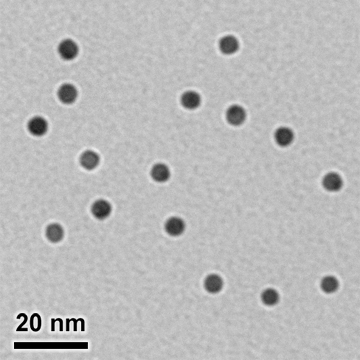
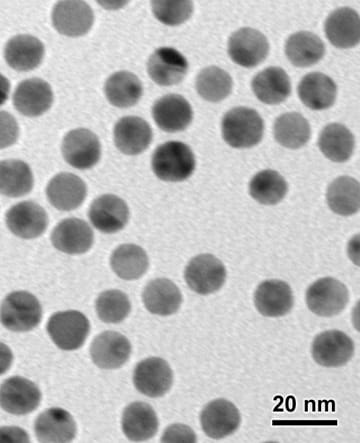
Claridge, Alivisatos and group present a method for the preparation and isolation of discrete, 1 : 1 conjugates of 5 and 20 nm gold particles with oligonucleotides in the most recent issue of Nano Letters. Discrete DNA-gold nanoparticle conjugates with DNA lengths as short as 15 bases were isolated for both 5 and 20 nm gold particles and purified by anion-exchange HPLC. Separation of conjugates containing discrete numbers of conjugate biomolecules is a major challenge in the bioconjugate chemistry of gold nanoparticles, and conjugates comprising short DNA (<40 bases) and large gold particles (g20 nm) are difficult to purify by other means. However, their potential as substrates for plasmon coupling experiments makes them important tools and components for nanodevices, and therefore the ability to isolate discrete conjugates has important implications. Conjugate purity was demonstrated by hybridizing complementary conjugates to form discrete structures, which were then confirmed by TEM visualization.
Reference:
. . . . . . . . . . . . . . . . . . . . . . . . . . . . . . . .
To unsubscribe from this newsletter, simply reply to the e-mail version, and replace the subject line with "unsubscribe." Alternatively, visit our web site newsletter page at http://www.nanoprobes.com/Newsletter.html#unsubscribe.